
BREAKING CONVENTION (DAY 1) REVIEW: Rock Force Crew: Legacy, Precision and Battle-Ready Energy
Day one of Breakin’ Convention 2026 sets the tone with a dynamic and wide-ranging programme that celebrates the breadth of contemporary hip hop theatre. From explosive, battle-inspired showcases to more introspective and experimental works, the evening moves fluidly between high-energy crew pieces and finely detailed duets. The line-up reflects the festival’s global reach, bringing together artists who push the form in different directions—whether through musicality, storytelling, or conceptual choreography. There is a palpable sense of exchange throughout the night, with each piece building on the last, creating a rhythm that oscillates between intensity and restraint.
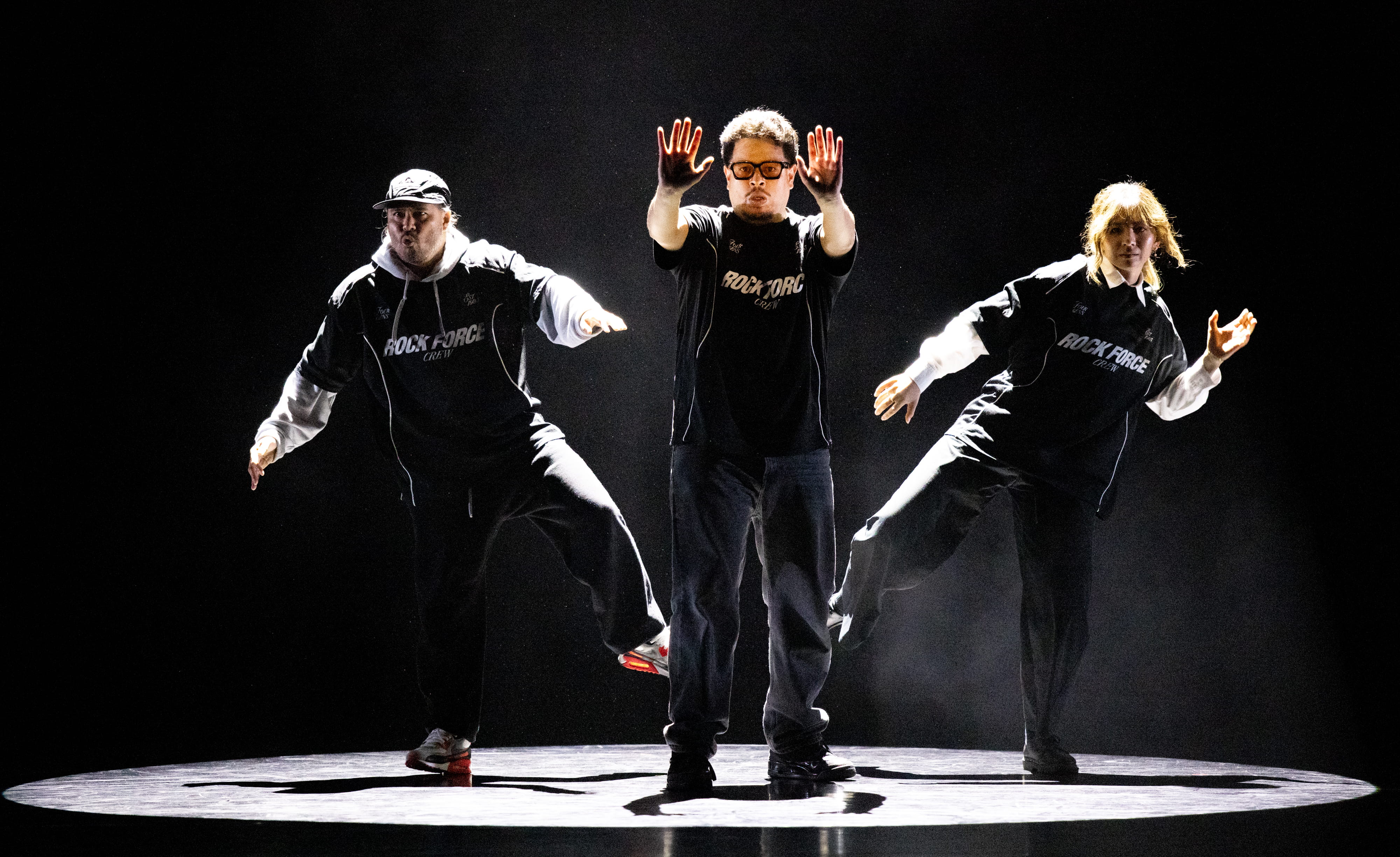
Rock Force Crew bring a sense of lineage that anchors the opening night in hip hop’s foundational vocabulary. Their presence is not framed as nostalgia, but as continuity—an active demonstration of breaking as both discipline and culture.
On stage, their approach is defined by clarity and control. Power moves are deployed with precision rather than excess, and group synchronisation carries the weight of long-standing practice. There is a confidence in their timing that speaks less to performance and more to lived battle experience.
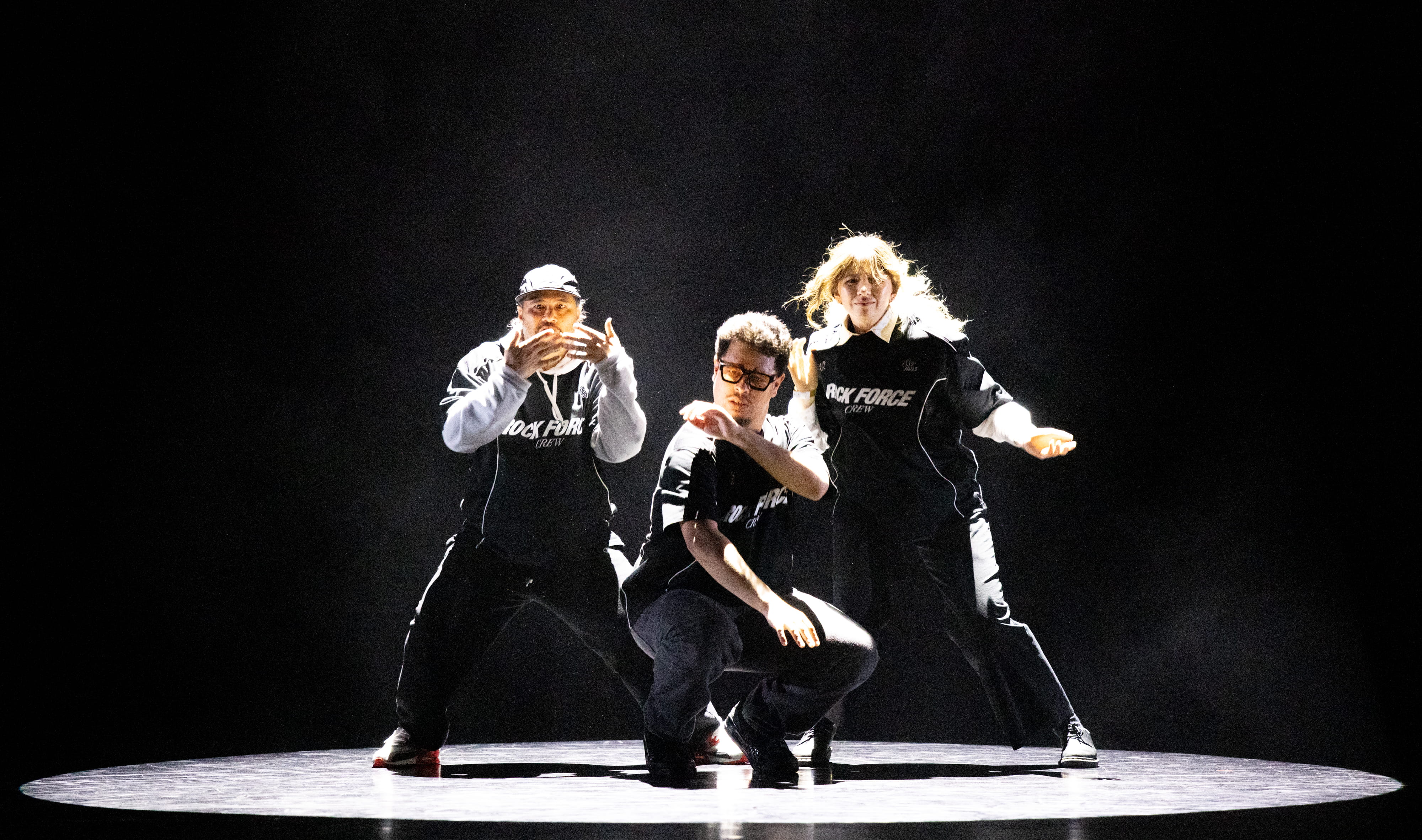
What is most striking is how unforced the energy feels. Nothing is over-stylised; instead, the focus remains on execution and presence. Within the wider chaos of Friction, Rock Force Crew function as a stabilising force—reminding the audience of breaking’s origins in skill-based exchange while still fully occupying a theatrical space.
WRITTEN BY: Nura Arooj